The route guesses.
ClearPath knows.
On-demand dispatch for shredding and document destruction routes. The route shrinks to the bins that are actually full.
Calendar-based shredding routes run blind.
A driver runs the same route on the same schedule. Some bins are full. Most aren’t. The route doesn’t change either way.
Calendar-based pickup is the default in shredding and document destruction. The schedule is a guess at which bins actually need a truck.
The guess is mostly wrong. The truck stops at bins that didn’t need it and runs the risk of arriving late at the one that’s about to overflow.
For the operator, that’s fuel and labor spent on stops that didn’t earn anything, on a route that can’t get any tighter without better information.





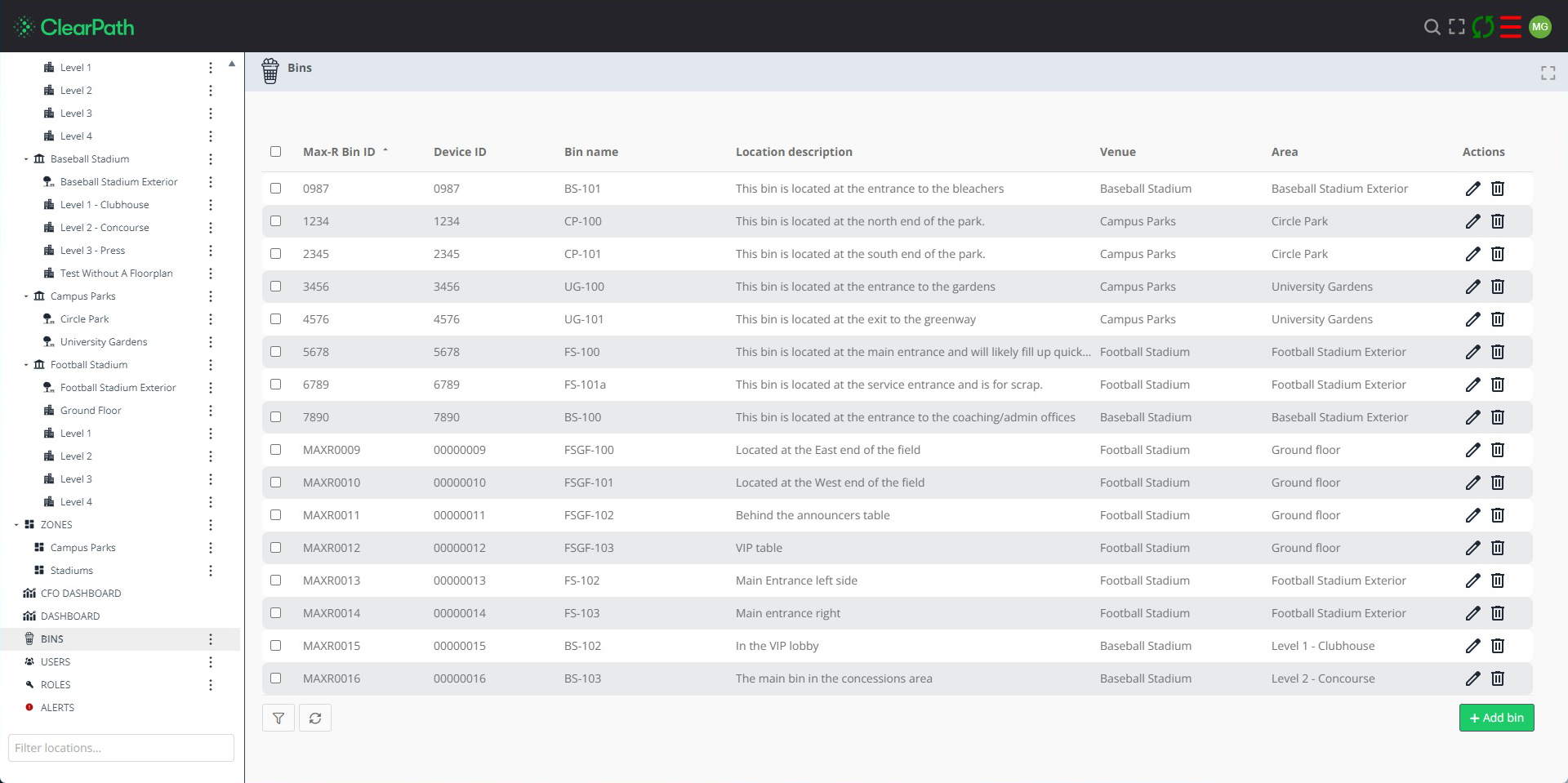
ClearPath sees what’s full and builds the route.
Sensors in every bin track real-time fill. ClearPath reads the data, decides which bins need service, and assembles the route in real time.
The driver opens a mobile hit list and sees the bins to service in priority order, not the bins the calendar happens to schedule. The dispatcher sees the same operation from a route-wide view.
Pickups happen against actual fill. Routes get re-sequenced. The stops the truck makes mean something.
The wasted stop is the buying decision.
Everything else is supporting math.
In shredding and document destruction, the dominant value isn’t compliance protection. It’s the wasted stop.
An operator on flat-fee recurring billing pays for the truck whether or not it needed to roll. Every stop that didn’t need to happen is fuel and labor spent for nothing, at revenue that doesn’t move either way. Eliminate enough of those stops and the savings are pure margin, not a discount the customer notices.
An operator on per-visit billing feels the same waste differently. A stop that didn’t need to happen is a stop that could have gone to a new account instead. The math isn’t about cutting trucks. It’s about what the trucks already on the road can carry.
Overflow is the same problem from the other direction, and it still matters. A bin that fills past capacity between visits is a complaint that reaches the customer’s compliance team before it reaches the driver. But that’s the supporting argument here, not the lead.

Fewer wasted stops. More route to sell.
The wasted stop is the headline. The route and capacity gains underneath it are real on their own, before the documentation story in the next section even enters the conversation.

Trucks stop visiting bins that don’t need it.
Calendar-based pickup runs every bin on the same schedule whether it’s at 20 percent or 95 percent. Demand-triggered dispatch ends that. The stops that didn’t earn their fuel come off the route.
Routes shrink. Margin or capacity follows.
The route compresses to the bins that actually need pickup. What that frees up depends on how the operator bills: lower cost on a flat fee, more accounts served on a per-visit route. Either way, the truck does more with the miles it already drives.

Service history builds itself.
Every stop records the bin, the location, the day, and what was actually in it. The history feeds route planning today and the documentation story in the next section, without extra paperwork.
Every destruction event, time stamped. Every item, accounted for.
HIPAA, FACTA, GLBA, and NAID AAA certification all care about the same question: can the operator prove what happened to the documents and when. If it wasn't documented, it didn't happen, at least not in an audit. A calendar isn't a record. It's a plan.
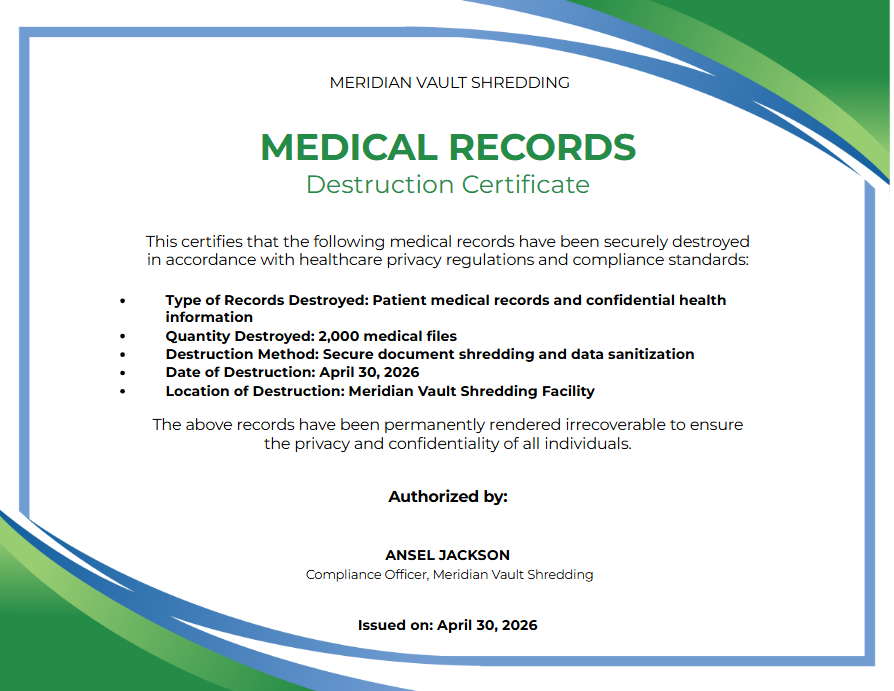
ClearPath produces the record as a byproduct of running the route. Every bin has a service history. Every pickup is timestamped with location and fill level at collection. The data sits in the platform and exports to whatever an operator’s own customer, or their own auditor, wants to see.
This isn’t a separate compliance product layered on top of the route software. It’s the same dispatch data, organized for the question someone will eventually ask.
The same record matters on the product side. When a customer sends branded apparel, recalled electronics, or proprietary hardware for destruction, what they're paying for isn't the shredding. It's the proof that it happened. A certificate of destruction has to name what was destroyed, how much, by whom, and when. For a brand protecting a launch or managing a recall, that certificate is the liability protection. ClearPath produces it the same way it produces the service history - as a byproduct of the event, not a form filled out after the fact.
Two billing models. The same math underneath.
Two illustrative scenarios anchored in public industry pricing data, an initial company pull, and reasonable route assumptions, not validated deployment math. The numbers will be specific to each operator. The shape holds across the category.

The flat-fee regional operator
A regional operator running 50 commercial accounts on weekly routes. One flat monthly fee per account, whether the truck came once or four times. Calendar service runs every account on the same cadence whether the bin is at 20 percent or 95 percent. Cutting even a third of the stops that didn’t need to happen, at a conservative $8 to $12 in fuel and driver time per stop, returns somewhere in the range of $7,000 to $10,000 a year in pure margin on that one route, fuel and labor the operator was never billing separately for. Scale that across a fleet and the number scales with it.
The per-visit operator building capacity
An operator billing by the pickup rather than by the month sees the same wasted stop differently. Every stop that didn’t need to happen today is capacity to add a new account tomorrow, on the same truck, the same driver, the same day. Adjacent waste-sensor deployments have found bins sitting at only a quarter to under half full when collected on a fixed schedule. Recovering even part of that gap is room for another two or three dozen accounts before a new truck or driver is needed. The pitch isn’t fewer stops. It’s more accounts on the trucks already on the road.

Put ClearPath on your routes.
Tell us about the operation: account count, bin count, basic geography, how you bill. We'll walk you through how the economics work for your specific setup.
You can also brand ClearPath as your own service to your customers and capture the recurring revenue. ObjectSpectrum builds and operates the platform. You own the relationship.